Source laboratory ultrasonic cell disruptor for DNA extraction, protein isolation, and sample homogenization
Compare 30 laboratory ultrasonic cell disruptor units from verified Chinese manufacturers. These machines offer customizable power ranges, temperature control, and volume capacities to suit diverse research needs.
Key considerations
Products List


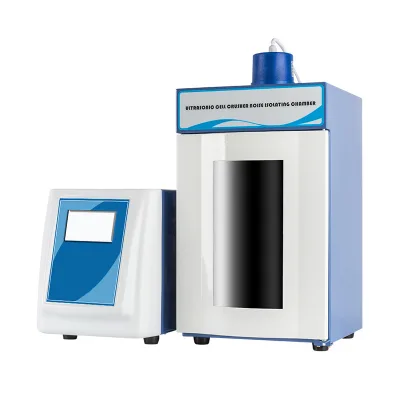


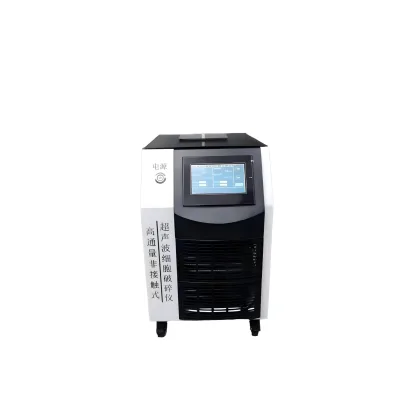


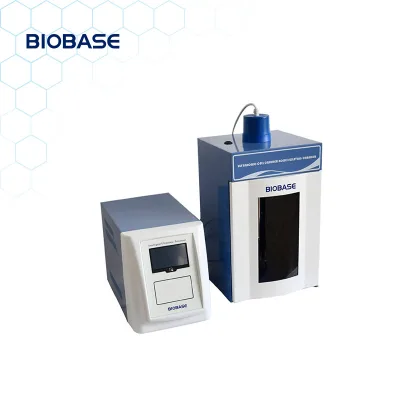

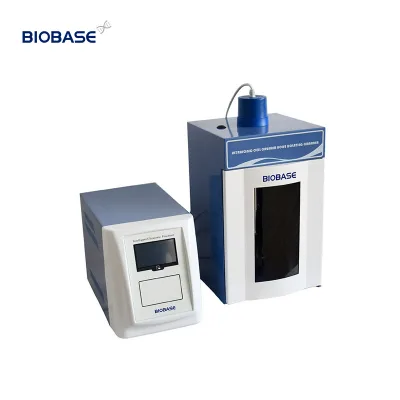


Comprehensive Sourcing Guide
Strategic Sourcing Guide for Laboratory Ultrasonic Cell Disruptors
Selecting the right laboratory ultrasonic cell disruptor requires a rigorous evaluation of technical parameters, operational compatibility, and supplier reliability. For procurement professionals in the life sciences and research sectors, the decision extends beyond the initial purchase price to encompass the device's ability to maintain consistent cell lysis, its integration with existing laboratory workflows, and its long-term durability. The market offers a diverse array of models, each tailored to specific volume requirements and power outputs. This guide provides a structured approach to evaluating these instruments, ensuring that the selected equipment aligns with precise scientific needs while adhering to strict quality and safety standards.
Technical Specifications and Operational Parameters
The core functionality of an ultrasonic cell disruptor is defined by its ability to generate high-frequency sound waves that create cavitation bubbles within a liquid sample. These bubbles collapse violently, generating shear forces that rupture cell membranes. When evaluating potential units, buyers must scrutinize the working frequency and ultrasonic power ranges, as these directly influence the efficiency of the disruption process.
Observed market data indicates that effective units typically operate within a frequency range of 20-25 kHz, with a specific tolerance often cited as 22±1 kHz. This narrow band is critical for maintaining resonance and preventing energy loss. The power output is equally significant; units may offer a range from 50 to 1000 Watts, or more specifically 100 to 1000 Watts, depending on the model. A device with a 150W power rating might be suitable for smaller, high-precision tasks, whereas higher wattage is necessary for processing larger volumes or tougher cell types.
The physical dimensions of the ultrasonic horn, often referred to as the probe, are another vital specification. A standard probe diameter of φ10mm is commonly observed, but the compatibility of the horn with the sample vessel must be verified. Furthermore, the reaction volume is a key constraint; available models support a range from 10 to 500 ml, with some specific configurations offering a 600 ml standard capacity. Buyers should also consider the temperature control capabilities, as ultrasonic energy generates heat. Effective systems provide a temperature control range from -5°C to 100°C or a room temperature to 90°C range, ensuring that heat-sensitive samples are not degraded during the process.
| Parameter | Typical Observed Range | Critical Consideration |
|---|---|---|
| Working Frequency | 20-25 kHz (22±1 kHz) | Must match probe resonance for efficiency. |
| Ultrasonic Power | 50-1000 W (100-1000 W) | Higher power for larger volumes or tough cells. |
| Reaction Volume | 10-500 ml (up to 600 ml) | Must align with sample batch sizes. |
| Temperature Control | -5 | Essential for preventing sample overheating. |
| Single Cycle Time | 0.1~9.9 seconds | Allows for precise pulse control. |
| Total Working Time | 1~999 minutes | Determines continuous operation limits. |
Compliance, Certification, and Safety Standards
While specific certification statuses like CE or ISO9001 are often mentioned in general market contexts, procurement teams must verify these claims directly with the supplier rather than relying on secondary descriptions. The absence of a specific certification on a product listing does not necessarily indicate non-compliance, but the lack of verifiable documentation is a risk factor.
Safety is paramount in laboratory environments. Buyers should look for units with a Protection Class of IP55, which indicates a degree of protection against dust and low-pressure water jets, making the device suitable for wet laboratory conditions. Additionally, the electrical safety of the unit must be confirmed. Units often support dual voltage inputs, such as 110 V and 220 V, to accommodate different regional power standards. The power supply requirement should be explicitly checked against the laboratory's available infrastructure to avoid the need for costly transformers or electrical modifications.
The accuracy class of the instrument is another compliance metric. High accuracy is a standard expectation for research-grade equipment, often achieved through computer control systems. The interface should be intuitive, with many modern units featuring a 4.3-inch true-color capacitive touchscreen or a digital display. Voice alarm and prompt functions are also valuable features that enhance operational safety by alerting users to errors or completion of cycles.
Cost Drivers and Pricing Structure
The pricing of laboratory ultrasonic cell disruptors varies significantly based on the complexity of the features, the build quality, and the brand reputation. The observed price range in the market spans from approximately $290 to $5,000. This wide disparity reflects differences in power capacity, temperature control sophistication, and the inclusion of advanced automation features.
Several factors drive the cost of these instruments. First, the ultrasonic power range is a primary determinant; higher wattage units capable of processing larger volumes naturally command a premium. Second, the temperature control system adds to the cost; units with a wide range (e.g., -5°C to 100°C) require more complex cooling and heating mechanisms than those limited to room temperature to 90°C. Third, the display and control interface contribute to the price; a true-color capacitive touchscreen with programmable cycles is more expensive than a basic digital display.
Buyers should also consider the Minimum Order Quantity (MOQ) and packaging. In many cases, the MOQ is as low as 1 unit, allowing for flexible procurement for single-lab setups. The packaging is typically standardized in cartons, with specific dimensions such as 35x22x12 cm for single packages. The gross weight of a single unit can vary, with some models weighing around 4.000 kg, while others, particularly those with larger frames or additional components, may weigh significantly more. Understanding these logistical details is essential for budgeting shipping and handling costs.
Typical Applications and Workflow Integration
Ultrasonic cell disruptors are versatile tools used across various scientific disciplines. The primary application is cell lysis, where the device breaks open cells to release intracellular components such as proteins, DNA, or RNA for analysis. The "Crushing Capacity" of these units, often ranging from 0.5 to 200 ml, dictates the scale of the application. Smaller capacities are ideal for high-throughput screening or micro-scale extractions, while larger capacities suit preparative work.
Beyond basic lysis, these instruments are employed in homogenization, emulsification, and nanoparticle dispersion. The "Loading Method" is a critical consideration for workflow integration. Some units utilize a dynamic load approach, which is suitable for continuous processing, while others may use an electronic load for more controlled, batch-specific operations. The "Oil Cylinder Position," often located at the top in certain models, can influence the stability and ease of use during operation.
The application scope also extends to auto-testing environments, where the device must integrate seamlessly with automated systems. In such cases, the "Type" of the machine, classified as a testing machine, implies a need for robust data logging and repeatability. The "Mass Scope of Workpiece" and "Max Diameter of Workpiece" specifications, while more relevant to industrial machinery, serve as a reminder that the physical constraints of the sample holder must be respected to ensure optimal performance.
Supplier Evaluation and Customization Capabilities
When selecting a supplier, buyers should prioritize those who offer comprehensive customization support. The market data indicates that many manufacturers provide OEM (Original Equipment Manufacturer), ODM (Original Design Manufacturer), and OBM (Original Brand Manufacturer) services. This flexibility allows laboratories to brand the equipment with their own logos or request specific modifications to the hardware or software to suit unique research protocols.
The brand name of the supplier is a factor in reputation, with names like Cedric and LANGSHUO appearing in the market. However, the specific brand should not be the sole deciding factor. Instead, buyers should evaluate the supplier's location and origin. Products are frequently sourced from regions such as Shandong and Hunan in China. While the geographic origin is a fact, the quality of manufacturing depends on the specific factory's adherence to quality management systems.
Buyers must verify the "Accuracy Grade" of the supplier's products. Control systems that are computer-controlled generally offer higher precision and repeatability. The "Single Ultrasonic Cycle Time" and "Total Working Time" capabilities should be discussed to ensure the supplier can meet the throughput requirements of the laboratory. Additionally, the "Warranty" period, often cited as 1 Year, is a standard benchmark, but buyers should negotiate for extended coverage or comprehensive service agreements to mitigate long-term risks.
Quality Control and Long-Term Procurement Considerations
Ensuring the long-term reliability of an ultrasonic cell disruptor requires a proactive approach to quality control. Buyers should request detailed test results and performance data from the supplier before finalizing a purchase. While specific test data may not always be publicly listed, the expectation of "High Accuracy" and "Control: Computer Control" suggests that the device should undergo rigorous calibration and testing prior to shipment.
The "Model Number" is a crucial identifier for future maintenance and parts replacement. Common models include TOB-LC-1000D, TOB-LC-2008, CD-UCD96, LS-G120, and DW-SD20-1200. Having the exact model number ensures that replacement parts, such as ultrasonic horns or probes, are compatible with the original unit. The "Single package size" and "Single gross weight" are also important for logistics planning, especially when importing equipment from overseas.
Long-term procurement considerations include the availability of spare parts and the technical support offered by the supplier. A 1-year warranty is a baseline, but the ease of obtaining replacement components and the responsiveness of technical support teams are critical for minimizing downtime. Buyers should also consider the "Selling Units," which are typically single items, allowing for the purchase of individual units without the need for bulk commitments.
In conclusion, sourcing a laboratory ultrasonic cell disruptor involves a careful balance of technical specifications, compliance verification, and supplier evaluation. By focusing on the observed parameters such as frequency, power, and temperature control, and by demanding transparency regarding certifications and customization options, procurement professionals can secure equipment that meets the rigorous demands of modern scientific research. The decision should be driven by a clear understanding of the specific application needs, ensuring that the chosen instrument delivers consistent, high-quality results over its operational lifespan.
FAQs
What is the working frequency range for these devices?
The working frequency typically ranges from 20 to 25 kHz, with a specific tolerance of 22±1 kHz. This narrow band ensures resonance and efficient energy transfer during cell disruption processes.
Can the device handle temperature-sensitive samples?
Yes, the device offers a temperature control range from -5 to 100°C or room temperature to 90°C. This capability prevents sample degradation by managing heat generated during ultrasonic operation.
What customization options are available for buyers?
Customization support includes OEM, ODM, and OBM services for branding and design modifications. Buyers can request specific hardware or software adjustments to align with unique research protocols.
How much power does the ultrasonic horn consume?
Ultrasonic power ranges from 50 to 1000 Watts depending on the specific model configuration. Higher wattage units are suitable for larger volumes or tougher cell types requiring more energy.
What is the minimum order quantity for these units?
The minimum order quantity is one unit, allowing for flexible procurement for single-lab setups. This low MOQ supports individual laboratories without requiring bulk commitments for initial testing.
Which display type is featured on the control panel?
The device features a 4.3-inch true-color capacitive touchscreen or a digital display interface. This allows for intuitive programming of cycles and clear monitoring of operational parameters.